Zenon Clinic blog
Facial Rejuvenation Over 50: Resurfacing or Volume Restoration?
Facial rejuvenation in Budapest over 50 starts with working out whether the skin's surface has changed or the face has lost fullness. This guide explains what laser resurfacing, microneedling and hyaluronic acid volume restoration are for, who should avoid laser treatment, how to prepare, and what to expect afterwards.
Tartalomjegyzék
- Resurfacing or volume restoration: what is the difference?
- Laser resurfacing: ablative or non-ablative?
- Who should avoid laser treatment, and how to prepare
- Microneedling and radiofrequency treatments
- Volume restoration with hyaluronic acid
- Aftercare and what to expect
- How much does facial rejuvenation cost?
- Facial rejuvenation at Zenon Clinic
- Frequently asked questions about facial rejuvenation over 50
Over 50, several changes often appear at once: fine lines, sun spots, uneven texture, flatter cheeks, a softer jawline. These call for different treatments. You can read about sagging contours and how they are treated on Zenon Clinic's sagging skin page; this article focuses on choosing between resurfacing and volume restoration.
Key takeaways
Resurfacing treats the surface (fine lines, spots, texture, scars), while volume restoration treats lost fullness; one does not replace the other.
According to Mayo Clinic, laser resurfacing does not fix sagging skin.
Ablative laser is stronger with a longer recovery; non-ablative laser is gentler, but results are subtler and several sessions are needed.
Before laser treatment, mention cold sores, sun exposure, previous isotretinoin and pregnancy; your doctor decides on antiviral prevention.
Filler results are temporary, and rare serious complications can occur; knowing the warning signs is important.
Resurfacing or volume restoration: what is the difference?
It helps to sort the changes you see in the mirror into four groups, as each calls for a different treatment:
Skin surface: fine lines, sun spots, uneven tone and texture, mild acne scars – these call for resurfacing treatments (laser, microneedling).
Volume: flatter cheeks, hollow temples or under-eye area, deeper folds – these call for volume restoration (for example hyaluronic acid filler).
Laxity, contour: a softer jawline, jowls – see the sagging skin page.
Expression lines: forehead and eye lines that appear with movement – these may call for a different treatment, such as botulinum toxin.
Age alone does not decide the treatment: the skin of two women in their fifties can be very different. At your consultation, name the change that bothers you most.
Laser resurfacing: ablative or non-ablative?
According to Mayo Clinic, laser resurfacing is used for fine wrinkles, age spots, uneven skin tone and texture, sun-damaged skin and mild to moderate acne scars, but it cannot fix sagging skin. There are two main types:
Ablative laser (for example CO2 or erbium): removes the outer layer of skin and heats the layer beneath. According to Mayo Clinic, new skin usually covers the area in 7–10 days, full recovery takes at least a month, and the skin may look inflamed for months.
Non-ablative laser: stimulates collagen growth without removing the outer layer. It is less aggressive with a shorter recovery, but results are subtler and gradual: according to Mayo Clinic, texture and colour tend to improve more than wrinkles.
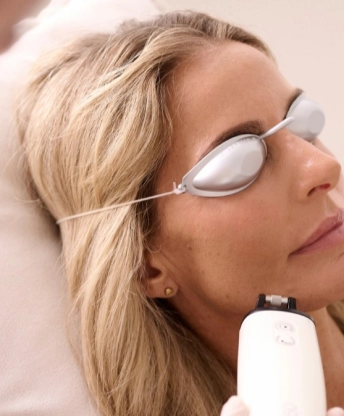
Both can be performed in fractional form, which treats the skin in microscopic columns; according to Mayo Clinic, this shortens recovery and reduces side effects. Fractional treatment usually requires 2–4 sessions spread over weeks or months. Zenon Clinic offers fractional CO2 laser resurfacing (Candela CORE) and non-ablative laser treatment (Candela Nordlys Frax Pro).
Who should avoid laser treatment, and how to prepare
According to Mayo Clinic, caution or postponement may be needed if you:
have taken isotretinoin in the past year;
have a connective tissue or autoimmune disease or a weak immune system;
have a history of keloids, or have had radiation therapy to the face;
are prone to cold sores or have had a recent outbreak;
have brown or Black skin or are very tanned (higher risk of lasting colour changes);
are pregnant or breastfeeding;
have a history of an outward-turning eyelid (ectropion).
Preparation. According to Mayo Clinic, too much unprotected sun up to two months before treatment can cause permanent colour changes in the treated area, and you should avoid smoking for at least two weeks before and after. For ablative treatment, or if you are prone to cold sores, your doctor may prescribe an antiviral medicine before and after treatment; do not start this on your own. Also mention previous aesthetic treatments and any medication.
Microneedling and radiofrequency treatments
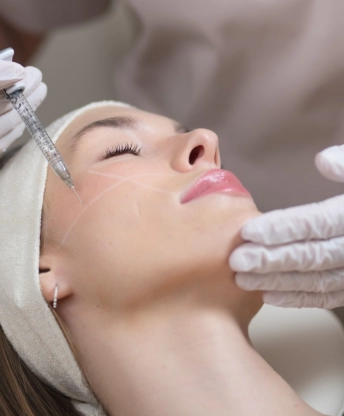
SkinPen microneedling uses tiny punctures to trigger skin renewal; Morpheus8 adds radiofrequency energy, which also heats the deeper layers. Both target skin quality and firmness; neither restores volume.
According to the FDA, redness, dryness, peeling and tenderness are common after microneedling; less often, pigment changes, cold sore flare-ups or infection can occur. For certain uses of radiofrequency microneedling, the FDA described reports of burns, scarring, fat loss and nerve damage in 2025; this is not frequency data, but it shows why a medical assessment is needed first. Mayo Clinic also mentions radiofrequency microneedling as an option for people at higher risk of colour changes after laser.
Volume restoration with hyaluronic acid
Hyaluronic acid fillers restore lost volume and soften some deeper folds; you can also read about facial contouring. They do not improve the skin surface (pigmentation, texture), nor can they remove significant excess skin. Results are temporary because the body breaks the material down; how long they last depends on the product, the area and the individual.
According to the FDA, swelling and bruising are common; a rare but serious complication is filler entering a blood vessel, which can cause tissue death, vision loss or stroke. Seek medical help immediately for unusual pain, white or bluish skin, or vision changes. Under-eye circles can have several causes (shadow, pigmentation, anatomy), and filler is not the right solution for all of them.
Aftercare and what to expect
According to Mayo Clinic, you should always protect your skin from the sun after laser resurfacing: use a moisturiser and a sunscreen of at least SPF 30 every day, as new sun damage can reverse your results. On freshly treated skin, follow the aftercare instructions you are given on when to start sunscreen and skincare products.
Results develop gradually depending on the method, so do not judge them immediately after treatment. Mayo Clinic also notes that you will continue to develop new lines with age and facial expressions. If you notice worsening pain, blistering, pus or fever after treatment, do not wait for your follow-up appointment.
How much does facial rejuvenation cost?
According to Zenon Clinic's price list (as of November 2026), for example:
CO2 laser skin rejuvenation: cheeks HUF 115,000, full face HUF 300,000 per session
Hyaluronic acid filler: HUF 110,000 per ml
Morpheus8, full face and double chin: HUF 250,000 per session
For laser treatments, the consultation fee is payable on top of the treatment price. Check current prices before booking, and ask for a quote showing the area, method, number of sessions and follow-up.
Facial rejuvenation at Zenon Clinic
At Zenon Clinic, you can discuss which change bothers you and which treatment suits it in a medical aesthetics consultation; a dermatological consultation can also be booked before laser resurfacing. If you have a new or changing spot on your skin, have it checked by a dermatologist first.
Frequently asked questions about facial rejuvenation over 50
Is facial rejuvenation worthwhile over 50?
Yes, if you know exactly what you want to improve. Age does not decide the treatment: what matters is whether the skin surface, fullness, contour or expression lines bother you.
Laser or filler: which do I need?
Laser treats the skin surface (fine lines, spots, texture, scars), while filler restores lost volume. You may need both, but neither replaces the other.
What is the difference between ablative and non-ablative laser?
Ablative laser removes the outer layer of skin; it is stronger, but full recovery takes at least a month. Non-ablative laser is gentler with a shorter recovery, but results are subtler and several sessions are usually needed.
Who should avoid laser resurfacing?
According to Mayo Clinic, caution is needed, for example, after recent isotretinoin, with autoimmune disease, a tendency to keloids, frequent cold sores, brown or very tanned skin, or during pregnancy and breastfeeding. Your doctor makes the decision.
Does laser fix sagging skin?
No. According to Mayo Clinic, laser resurfacing does not treat sagging skin; other treatments are needed for that.
How long do fillers last?
Temporarily, because the body breaks them down; how long depends on the product, the treated area and you. Ask for an estimate for your specific plan.
How much does laser facial rejuvenation cost?
According to Zenon Clinic's November 2026 price list, CO2 laser skin rejuvenation costs HUF 115,000 for the cheeks and HUF 300,000 for the full face per session; the consultation is charged separately. Book an appointment