Zenon Clinic blog
Skin Cancer Screening in Budapest: Risk, Follow-Up and the Limits of Examination
Skin cancer screening in Budapest does not mean the same examination and follow-up schedule for everyone: what you need differs depending on whether you want a check without symptoms, want to show a changing spot, or are attending follow-up after a previous finding. This guide explains which applies to you, when not to wait, how the examination works, when histology is needed, and what it costs.
Tartalomjegyzék
- Screening, investigation or follow-up: which do you need?
- When should you not wait for your next check?
- How does skin cancer screening work?
- If a suspicious lesion is found: removal and histology
- How often do you need follow-up?
- Prevention and self-checks
- How much does skin cancer screening cost at Zenon Clinic?
- Skin cancer screening at Zenon Clinic in Budapest
- Frequently asked questions about skin cancer screening
Skin cancer, including melanoma, can be treated well when detected early, so it is worth keeping an eye on your skin. At the same time, no screening offers a lifelong guarantee, and a suspicious change should not be judged at home: a dermatologist decides what needs to happen next.
Key takeaways
Screening (a check without symptoms), investigation (because of a changing spot) and follow-up (after a previous finding or skin cancer) are three different situations.
If a spot is new, different from the others, changing, itchy or bleeding, do not wait for your next planned check: book an appointment soon.
How often you need a check is decided by your dermatologist based on your individual risk and previous results; there is no universal annual rule.
A dermoscopic examination does not give a final diagnosis: if a spot is suspicious, removal and histology decide.
A clear result reflects your skin at that time; if something changes later, have it checked again.
Screening, investigation or follow-up: which do you need?
Screening: you have no symptoms but would like a dermatologist to check your moles.
Investigation: a specific spot is new, changing, itchy, bleeding or looks different from the others. Do not wait for a screening campaign or routine appointment; mention the problem when booking.
Follow-up: a previous examination recommended monitoring, or you have had skin cancer or a suspicious mole removed. Your doctor decides when you need to come back.
What does the evidence say about screening without symptoms? According to the US Preventive Services Task Force (USPSTF), the 2023 evidence is insufficient to assess the balance of benefits and harms of a visual skin examination by a clinician to screen for skin cancer in adolescents and adults without symptoms. This does not mean that screening is pointless, and it specifically does not apply to people with suspicious symptoms, those already under follow-up because of skin cancer, or those with a family history of skin cancer. It is therefore worth discussing whether and how often you need checks with a dermatologist, based on your own risk.
Risk factors. According to the USPSTF, melanoma risk is higher if you have fair skin, light-coloured eyes or red or blond hair, many moles, a history of frequent sunburn, or a personal or family history of skin cancer. These factors do not give you a personal risk percentage, but they may influence how often your dermatologist suggests checks.
When should you not wait for your next check?
The American Academy of Dermatology's (AAD) ABCDE rule helps you notice moles that need attention: asymmetry, an irregular border, uneven colour, a diameter over 6 mm and – most importantly – evolving (changes in size, shape, colour or height). The AAD also advises seeing a dermatologist if a spot is new, different from the others, itchy, bleeding or not healing.
This rule is not a home diagnosis: melanoma can be smaller than 6 mm and is not always dark – it can be a pinkish spot with little pigment. If you notice any of these signs, have it examined by a dermatologist soon, even if your last result was clear.
How does skin cancer screening work?
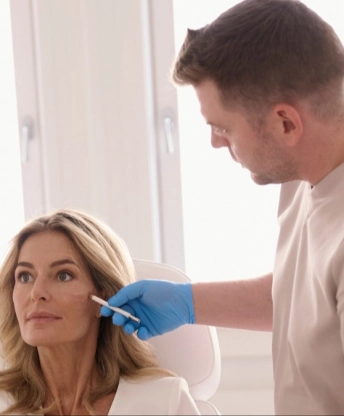
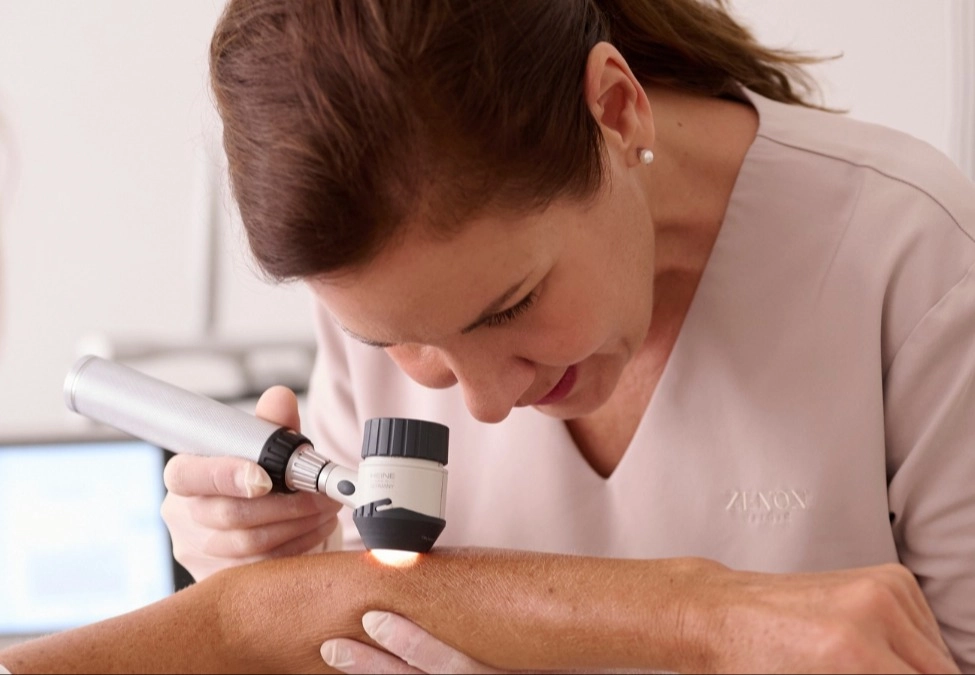
The appointment starts with a conversation: the dermatologist asks about your history, sunburns, family history and which spot you would like to show. They then examine your skin; in a full-body check, this includes areas that are hard to see yourself. A dermatoscope uses magnification and light to show the structure of a lesion; the examination involves no needles or incisions.
Zenon Clinic offers both traditional dermoscopic and full-body mole screening. According to the clinic, full-body screening uses the FotoFinder system with artificial-intelligence-supported imaging and takes about 30 minutes, depending on the number of moles. The recorded images can be compared at later visits, making new or changing spots easier to identify; however, the assessment is always made by the dermatologist.
If a suspicious lesion is found: removal and histology
Dermoscopy helps decide which spot needs further action, but a definitive diagnosis of skin cancer comes from histology. If the dermatologist considers a lesion suspicious, they may recommend a biopsy or full excision, and the tissue is examined in a laboratory. Not every mole needs to be removed; this is decided based on the examination findings and how the lesion has changed.
According to Zenon Clinic's mole removal page, all moles removed at the clinic are sent for histology. Ask how and when you will receive your results, what follow-up comes next, and what the fee includes, as consultation, removal and histology may be separate items. You can read about the options on the benign skin lesion removal page.
How often do you need follow-up?
There is no universal answer. For someone without symptoms and at low risk, a dermatologist may suggest less frequent checks; after many or atypical moles, a previous melanoma, a family history or a suspicious finding, more frequent checks may be recommended. After removal of a skin cancer, follow-up is set by your treatment plan. At any time, if you notice a new or changing spot, do not wait for your planned appointment.
Prevention and self-checks
According to the USPSTF, UV radiation from sunlight and tanning beds is the main environmental risk factor for skin cancer. Prevention includes year-round sun protection, avoiding the midday sun, protective clothing and avoiding sunbeds. During self-checks, look for new spots and changes in existing ones, and use photos for comparison if you have them. Self-checks and medical examinations complement each other; neither replaces the other.
How much does skin cancer screening cost at Zenon Clinic?
According to Zenon Clinic's price list (as of November 2026):
Dermatological mole screening with dermoscopy: HUF 47,000
Full-body mole screening with FotoFinder imaging and specialist video dermoscopy: up to 50 moles HUF 78,000, 50–99 moles HUF 97,000, over 100 moles HUF 117,000
Removal of a skin lesion with a punch biopsy tool: HUF 54,000 per lesion
The fee for surgical removal does not include histology. The FotoFinder categories are pricing categories, not medical recommendations; agree which examination you need when booking or with your dermatologist. Please check current prices before booking. Zenon Clinic is a private practice and examinations are not covered by the Hungarian state health insurance (TB).
Skin cancer screening at Zenon Clinic in Budapest
At Zenon Clinic (1052 Budapest, Deák Ferenc utca 23, 2nd floor, entrance next to the Lindt shop), you can book a screening, an investigation of a specific spot or a follow-up appointment. When booking, say which one you need, and if a spot has changed, describe what you have noticed.
Frequently asked questions about skin cancer screening
How often should I have a skin cancer check?
There is no universal rule: your dermatologist recommends a frequency based on your individual risk (number of moles, sunburns, personal and family history) and previous results. If a spot is new or changing, do not wait for your next planned check.
From what age is mole screening recommended?
There is no general starting age. Have any new, changing or symptomatic spot checked by a dermatologist regardless of age; for children, a parent should arrange the examination.
Who benefits most from regular checks?
People with many or atypical moles, a history of frequent sunburn, fair skin, or a personal or family history of skin cancer. A dermatologist may recommend individual follow-up for them.
What happens if a suspicious lesion is found?
The dermatologist may recommend a biopsy or excision, and the tissue is sent for histology. Ask when and how you will receive the result and what follow-up comes next.
Is a clear result enough until my next check?
A clear result reflects your skin at that time. If a new spot appears later, or a mole changes, bleeds or itches, do not wait for your planned appointment; have it checked again.
Can a benign mole be removed?
Yes, for example if it is constantly irritated or in an awkward place. It must be examined by a dermatologist first; at Zenon Clinic, removed moles are sent for histology.
Is screening covered by Hungarian state health insurance?
Zenon Clinic is a private practice and examinations are not covered by the state health insurance (TB). Check funding conditions with other providers directly. Book an appointment