Zenon Clinic blog
Anti-Ageing Treatments Over 40: How to Choose Based on Your Skin's Changes
Anti-ageing treatments over 40 work best when your choice starts from the specific change in your skin, not from your age. In this article, you will learn how skin changes after 40, how botox, hyaluronic acid fillers and skinboosters differ, when a skin-renewing treatment may be an option, what risks each procedure carries, and how to prepare for your consultation.
Tartalomjegyzék
- How does skin change after 40?
- Botox, hyaluronic acid fillers and skinboosters: what is the difference?
- Botox: for expression lines
- Hyaluronic acid fillers: for volume loss
- Skinboosters: for skin quality
- Skin texture and firmness: HydraFacial, SkinPen, Morpheus8
- Risks and recovery: what to expect
- Skincare at home after 40
- How to choose a treatment
- Anti-ageing treatments at Zenon Clinic
- Frequently asked questions
You may notice that the skincare routine that used to work no longer feels the same. Skin does not change overnight: alongside natural ageing, hormonal changes, sun exposure and everyday habits all play a part.
Key takeaways
After 40, skin can look drier, less elastic or less firm; choose a treatment based on what has changed for you.
Botox targets expression lines, hyaluronic acid fillers address volume loss and skinboosters aim to improve skin hydration; they are not interchangeable.
A hyaluronic acid serum and an injectable filler are not the same thing.
After fillers, swelling and bruising can last days or weeks; rare but serious complications can also occur.
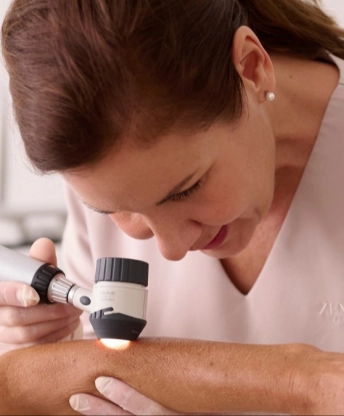
If you notice a new or changing skin lesion, have it checked by a dermatologist first, before any aesthetic treatment.
How does skin change after 40?
After forty, lines that used to smooth out quickly may stay visible for longer, for example around the eyes even when your face is at rest. Skin may become less elastic, facial contours (the jawline, the cheeks) may soften, skin can feel drier, and pigmentation or uneven tone may appear. These are separate changes and do not necessarily develop to the same extent.
Hormonal changes. According to the American Academy of Dermatology (AAD), skin loses about 30% of its collagen during the first five years of menopause, followed by roughly 2% a year over the next 20 years. The AAD also notes that skin loses some of its ability to hold water during menopause, so it can become drier. These are average population figures, not an individual forecast.
The role of the sun. A 2013 study of 298 Caucasian women in France found that, in the group studied, around 80% of visible facial ageing signs were linked to UV exposure. This is not a universal figure for everyone, but it shows why everyday sun protection matters, not just on holiday. The AAD recommends a broad-spectrum sunscreen with SPF 30 or higher every day during menopause too.
Age alone does not describe your skin: two people in their forties may have completely different main concerns. If a spot appears suddenly or changes, do not treat it as an aesthetic issue; have it examined by a dermatologist.
Botox, hyaluronic acid fillers and skinboosters: what is the difference?
These three injectable treatments address different concerns, so choose based on your concern rather than the treatment name.
Botox: for expression lines
According to the AAD, botulinum toxin temporarily relaxes selected facial muscles, so lines that appear with movement (forehead lines, frown lines, crow's feet) become less visible. It does not restore volume or hydrate the skin; the AAD states that results typically last about 3–4 months, sometimes longer. You can read more on Zenon Clinic's botox treatments page.
Hyaluronic acid fillers: for volume loss
Hyaluronic acid fillers are injected under the skin to restore volume in a specific area, such as the cheeks, the lips or deeper folds. Zenon Clinic's dermal fillers and facial contouring pages state that the clinic uses Juvéderm® and Teoxane® fillers. For lip fillers, the clinic gives 6–12 months as an indicative estimate; how long results last depends on the product, the area and the individual.
Skinboosters: for skin quality
A skinbooster is an injectable treatment that aims to improve skin hydration and quality rather than reshape facial contours. It therefore does not replace botox or fillers. The exact product and technique vary by treatment; ask about this during your consultation.
Serum or filler? Hyaluronic acid can bind a lot of water, which is why it is used in moisturisers, serums and fillers alike. A serum you apply to your skin is part of daily skincare, whereas a filler is an injectable procedure performed by a doctor; one does not replace the other.
Skin texture and firmness: HydraFacial, SkinPen, Morpheus8
If your main concern is not a particular line or volume loss but the surface, texture or firmness of your skin, a skin-renewing treatment may be an option. HydraFacial is a needle-free cleansing, exfoliating and hydrating facial. SkinPen® is a microneedling treatment which, according to Zenon Clinic, is used for fine lines and uneven texture. Morpheus8 combines microneedling with radiofrequency and is offered by the clinic for skin tightening, typically as a course of three sessions according to the clinic. You can find an overview on the medical cosmetic facial treatments page.
For laser and other device-based treatments, the number of sessions, recovery and results depend on the method, the device and the treated area, so a single general timeframe or number of sessions would be misleading.
Risks and recovery: what to expect
Every treatment carries risks, and these vary by procedure. According to the FDA, common reactions after fillers include bruising, redness, swelling, pain and tenderness; many resolve within days to weeks, so a one- to two-day recovery cannot be assumed for everyone. A rare but serious complication is filler entering a blood vessel, which can cause tissue damage, vision problems or stroke.
Seek medical help immediately if, during or after a filler treatment, you experience unusual or increasing pain, white, grey or bluish skin near the treated area, or changes in your vision. In Hungary, call 112 for signs of stroke, or if you have difficulty breathing, swallowing or speaking after botox. Ask in advance whom to contact if you have any concerns after treatment.
Skincare at home after 40
Whatever treatment you choose, your routine should be built on gentle cleansing, moisturising and sun protection. The AAD's menopause guidance notes that products containing retinol or peptides may help support collagen, while moisturisers that support the skin barrier (for example with ceramides) can help with dryness.
Introduce only one new product at a time so you can see how your skin responds.
Take extra care with sun protection after chemical (AHA) exfoliation, as it can make your skin more sensitive to the sun.
If your skin feels tight or irritated after a product, make a note and discuss it with a dermatologist or skincare professional.
How to choose a treatment
Before your consultation, think about three questions: where you see the change, when it is noticeable (with movement or at rest too), and what result you would consider natural. Crow's feet when you smile, thinner lips and general dryness are three different starting points.
Who will perform the treatment, and what are their qualifications? Injectable treatments are performed by a doctor.
What exactly is the procedure and product? Don't settle for a general aesthetic label.
What are the risks, contraindications and aftercare?
How many sessions are needed, and what is the total cost?
What are the alternatives, including simply adjusting your skincare for now?
Bring a list of your medical conditions, medications, allergies and previous aesthetic treatments; do not stop any medication on your own because of a treatment.
Anti-ageing treatments at Zenon Clinic
Zenon Clinic's medical aesthetics services include botox, hyaluronic acid fillers and skinboosters, while HydraFacial, SkinPen and Morpheus8 treatments focus on the skin's surface. According to the clinic's price list (as of November 2026), botox for one area costs HUF 50,000, hyaluronic acid filler HUF 110,000 per ml and skinbooster HUF 30,000 per ml; please check current prices before booking. You can also read about the clinic's wrinkle treatment options.
If you are not yet sure which treatment suits your concern, a medical aesthetic consultation is a good place to start; it does not commit you to treatment.
Frequently asked questions
How does skin change after 40?
It can look drier, less elastic or less firm, lines can become more persistent, and pigmentation may appear. According to the AAD, skin loses about 30% of its collagen on average in the first five years of menopause; the extent of change varies from person to person.
Which anti-ageing treatments are suitable over 40?
There is no treatment chosen by age alone. Botox may be considered for expression lines, hyaluronic acid fillers for volume loss, and skinboosters or skin-renewing treatments for skin quality; first identify what bothers you most.
What is the difference between botox, fillers and skinboosters?
Botox temporarily relaxes facial muscles, fillers restore volume, and skinboosters aim to improve skin hydration and quality. They address different concerns and are not interchangeable.
How long do the results last?
It depends on the treatment. According to the AAD, botox typically lasts about 3–4 months; Zenon Clinic gives 6–12 months as an indicative estimate for lip fillers. These are not guarantees.
How long is recovery after an injectable treatment?
According to the FDA, redness, swelling and bruising after fillers can last days to weeks, so a one- to two-day recovery is not realistic for everyone. Your doctor will give you specific aftercare instructions.
What are the risks of injectable and device-based treatments?
Temporary reactions are common, and rare serious complications can occur, such as filler entering a blood vessel. Seek medical help immediately if you experience unusual pain, white or bluish skin, or vision changes.
Do I need a medical consultation before an anti-ageing treatment?
Before an injectable treatment, yes: the doctor assesses which treatment suits your concern and whether you are a suitable candidate. The consultation does not commit you to treatment. Book an appointment