Zenon Clinic blog
Breast Augmentation Consultation in Budapest: How to Prepare
A breast augmentation consultation in Budapest is where a plastic surgeon assesses your anatomy and discusses with you which approach suits your goal. This guide explains what to clarify about size, shape and placement, what risks breast implants carry, which tests are needed before surgery, and what the price includes.
Tartalomjegyzék
- What is a breast augmentation consultation for?
- Implants or fat transfer, augmentation or lift?
- Size, shape and placement: what to discuss
- What are the risks of breast implants?
- Which tests are needed before surgery?
- Surgery and recovery
- Long-term monitoring, screening and breastfeeding
- How much do the consultation and surgery cost?
- Breast augmentation consultation at Zenon Clinic
- Frequently asked questions about breast augmentation
Choosing an implant does not start with naming a cup size. At the consultation, your body shape, the condition of your breasts and your expectations all matter, and there is time to ask all your questions before you decide anything.
Key takeaways
The consultation is an assessment and an opportunity to get information; it does not commit you to surgery, and final suitability is decided after pre-operative tests.
Volume (cc) alone does not show the expected cup size: width, projection and placement also matter.
According to the FDA, breast implants are not lifetime devices; further surgery may be needed later, and implants need monitoring for as long as you have them.
Before surgery, blood tests, an ECG, a chest X-ray and a breast ultrasound or mammogram are required; some conditions and medications may call for further tests.
The cost of surgery is individual; ask for an itemised quote showing what it includes.
What is a breast augmentation consultation for?
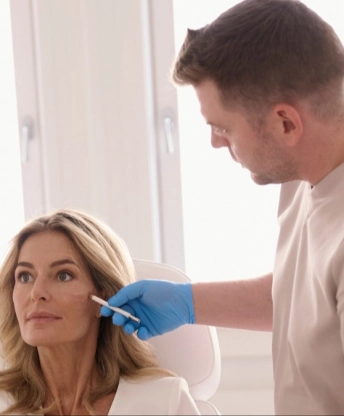
According to Zenon Clinic, at the first consultation the plastic surgeon assesses the current condition of your breasts and your wishes, and explains the types of implants, the surgical techniques and the results you can expect. The consultation includes an examination, but it does not establish final surgical suitability: that also depends on pre-operative test results.
What to bring: a list of your medical conditions, medications (especially blood thinners and aspirin), supplements and allergies; results of previous breast examinations (ultrasound, mammogram); and if you have had breast surgery before, its documentation and your implant card. Also mention if you smoke, are planning pregnancy or breastfeeding, or expect significant weight loss.
Implants or fat transfer, augmentation or lift?
Breast augmentation with implants: increases breast volume using silicone implants.
[Fat transfer breast augmentation](enmellzsir): the surgeon transfers your own fat, obtained by liposuction, to the breasts; it suits a smaller increase in volume and, according to Zenon Clinic, is considered if the surgeon finds you suitable.
Breast lift: corrects the position of sagging breasts but does not increase volume on its own; it can be combined with implants if needed.
Breast reduction: reduces volume; a different goal and surgical plan.
Tell your surgeon whether you mainly want fuller breasts, a lifted shape or both, as this determines which procedure may be considered.
Size, shape and placement: what to discuss
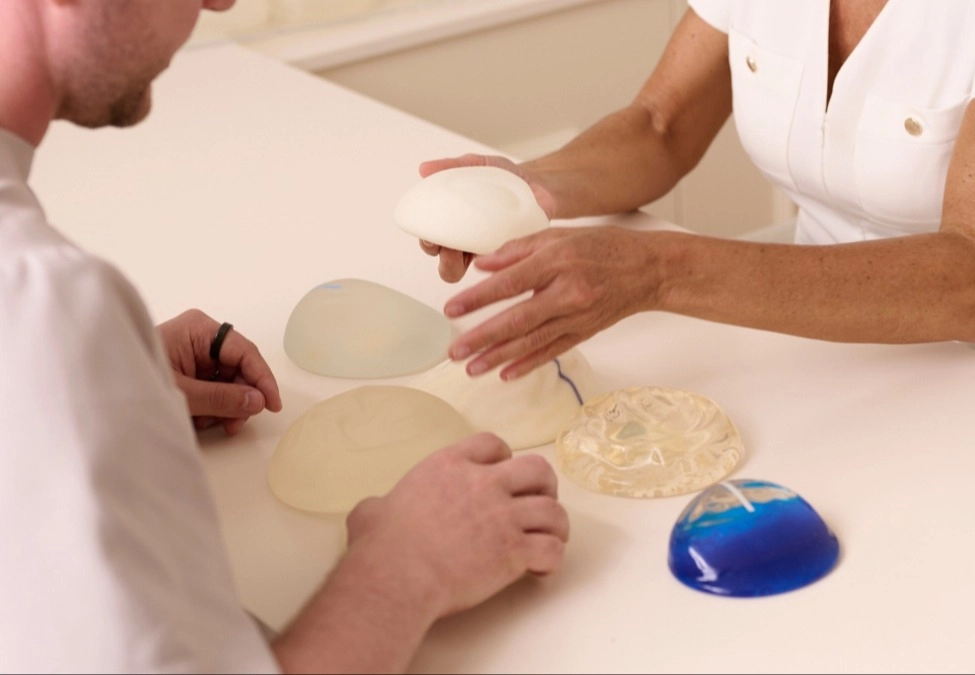
Implant volume is given in cubic centimetres (cc), but this alone does not show the expected cup size: implants of the same volume can differ in width and projection (profile). Round and anatomical (teardrop) shapes can create different contours. Your surgeon also considers your chest width, breast tissue and skin; another patient's implant size will therefore not necessarily give you a similar result.
An implant can be placed under the breast tissue, under the muscle or partly under the muscle; your surgeon recommends this based on your anatomy rather than your desired size. Ask whether you can try sizers and how to interpret what you see. Explain which proportions you find attractive and what clothing you picture yourself in; photos can be a reference point, but not a promise.
What are the risks of breast implants?
According to the US Food and Drug Administration (FDA), breast implants are not lifetime devices: the longer you have them, the more likely you are to need them removed or replaced, and you should assume that further surgery may be needed. The risks listed by the FDA include:
capsular contracture (scar tissue squeezing the implant) and breast pain;
implant rupture; with silicone implants, rupture can be "silent" (without symptoms);
infection, asymmetry, scarring, wrinkling and further surgery;
BIA-ALCL: a rare cancer of the immune system (not breast cancer) that occurs more often with textured implants;
rarely, other cancers in the capsule around the implant, and systemic symptoms described as breast implant illness.
In addition, every operation and anaesthetic carries its own risks (bleeding, blood clots), and sensation in the breast or nipple may change temporarily or permanently. According to the FDA, if you notice persistent swelling, pain or other changes around your breast, seek medical evaluation. Ask your surgeon which risks apply to you and how complications are managed.
Which tests are needed before surgery?
According to Zenon Clinic, blood tests, an ECG, a chest X-ray and a breast ultrasound or mammogram are always required before breast augmentation; some conditions, medications and previous plastic surgery may call for further tests. The clinic also advises that medications affecting blood clotting (such as aspirin) must always be discussed with the plastic surgeon; do not stop any medication on your own.
Ask how long test results remain valid, where you can have them done, and who will review them. If a result needs further discussion, it may also change your planned surgery date.
Surgery and recovery
According to Zenon Clinic, breast augmentation is performed by the plastic surgeon under general anaesthetic and requires a one-day stay at the clinic; wounds are closed with absorbable stitches, so no stitch removal is needed. The implant is inserted through the planned incision, for example in the fold beneath the breast.
Pain, swelling and bruising are expected in the first days and weeks; their intensity and duration vary from person to person. Breast shape develops gradually, so the early appearance is not the final result. Your surgeon will tell you, based on your own surgical plan, when you can return to work, exercise and upper-body exertion, and which bra to wear. Agree on follow-up dates in advance, and ask whom to contact if you have concerns.
Long-term monitoring, screening and breastfeeding
According to the FDA, implants need to be monitored for as long as you have them; with silicone implants, regular imaging (ultrasound or MRI) is recommended to detect silent rupture. Ask for and keep your implant card, which records the type and identification of your implant. Always mention that you have implants before a mammogram or breast ultrasound.
Breastfeeding is often possible after breast augmentation, but surgery may affect it. If you plan to have children, mention this at your consultation, as it may influence the plan.
How much do the consultation and surgery cost?
According to Zenon Clinic's price list (as of November 2026), a plastic surgery consultation with examination costs HUF 30,000, and a post-operative follow-up after one month costs HUF 25,000. The cost of surgery is individual: it depends on the type of implant, the complexity of the operation and whether it is combined, for example, with a breast lift.
Ask for an itemised quote showing what it includes: the implant, anaesthesia, hospital stay and follow-up visits, and whether the fee includes any applicable tax (VAT). Also ask whether the consultation fee is credited towards the cost of surgery. Please check current prices on the price list.
Breast augmentation consultation at Zenon Clinic
At Zenon Clinic, the consultation before breast augmentation is carried out by a plastic surgeon and includes an examination. You can also read about fat transfer breast augmentation.
Frequently asked questions about breast augmentation
What happens at a breast augmentation consultation?
The plastic surgeon assesses your breasts and your wishes, and explains implant types, surgical techniques and expected results. The consultation does not commit you to surgery; final suitability is decided after pre-operative tests.
How much does the consultation cost, and is it credited towards surgery?
According to Zenon Clinic's November 2026 price list, a plastic surgery consultation with examination costs HUF 30,000. Ask the clinic about crediting the fee when you book.
Implants or fat transfer?
Implants can achieve a larger increase in volume; fat transfer suits a smaller change, and your surgeon decides whether you are suitable. The two require different planning.
How long does a breast implant last?
According to the FDA, implants are not lifetime devices, their lifespan cannot be predicted for an individual, and further surgery may be needed later. Their condition is monitored with regular check-ups.
Which tests are needed before surgery?
According to Zenon Clinic, blood tests, an ECG, a chest X-ray and a breast ultrasound or mammogram; some conditions and medications may call for further tests.
Can I breastfeed after breast augmentation?
Often yes, but surgery may affect it. If you plan to have children, mention this at your consultation, as it may affect the surgical plan.
Is breast augmentation covered by Hungarian state health insurance?
Cosmetic breast augmentation is generally not covered; coverage depends on a medical indication. Zenon Clinic is a private clinic, and fees are paid by the patient. Book an appointment
További cikkek a témában